Le CRIL en bref
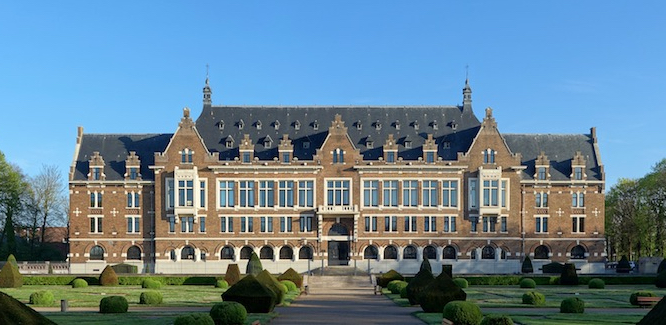
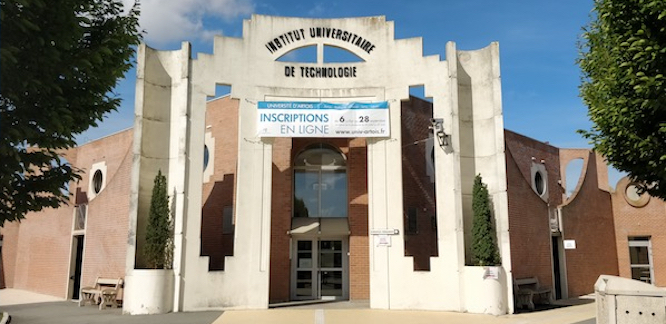
Le Centre de Recherche en Informatique de Lens (CRIL UMR 8188) est un laboratoire de l’Université d’Artois et du CNRS dont la thématique de recherche fédératrice concerne l'intelligence artificielle et ses applications. Il regroupe près de 70 membres : chercheurs, enseignants-chercheurs, doctorants et personnels administratifs et techniques.
Le CRIL participe à la Confédération Européenne de Laboratoires en Intelligence Artificielle CAIRNE et à l'alliance régionale humAIn. Il bénéficie du soutien du Ministère de l’Enseignement Supérieur et de la Recherche, du CNRS, de l’Université d’Artois et de la région Hauts de France.
Le CRIL est localisé sur deux sites à Lens : la faculté des sciences Jean Perrin et l’IUT.
Actualités (RSS)
IA^2 2026 : du 19 au 23 octobre — Le Touquet-Paris-Plage
L’édition 2026 de l’Institut d’Automne en Intelligence Artificielle sera consacrée cette année au thème : « Intelligence artificielle et sciences » L’Institut d’Automne en Intelligence Artificielle du GdR RADIA propose une école généraliste destinée à présenter les principales approches, méthodes et sous-disciplines de l’intelligence artificielle. Chaque édition met également l’accent sur une thématique particulière. Présentation de l’édition IA² 2026 L’intelligence artificielle transforme profondément les pratiques scientifiques. Elle intervient dans l’analyse de données, la modélisation, la simulation, la génération d’hypothèses, le raisonnement et l’aide à la découverte.
Séminaire Les assistants de code libres, où en est on ?
Daniel Le Berre
11 juin 2026 - 14:00Les LLMs sont désormais utilisés pour aider au développement d’applications. Un système comme open code permet d'expérimenter sur sa machine ce nouveau type d’outils. Il permet notamment de créer un environnement de développement à base d’agents spécialisés. Cette présentation est l’occasion d’échanger sur les possibilités offertes par des outils open source, et d’échanger sur les bonnes pratiques en termes de développement agentique souverain.
Séminaire Performance optimization of rotating electrical machines assisted by Machine Learning
Giorgio Pietrini
21 mai 2026 - 14:00The seminar will briefly describe the subject of the electric machines' design and optimization, highlighting the computational challenges, the main parameters, constraints, and needs in the contextof the future applications. Today's trends of Machine Learning (ML) utilization in this process will be summarized for the parametric optimization, topology optimization, and the new opportunities offered by the generative models. The conversation will thenbe opened to the questions and to explore the possibilities of research collaboration.
Deux cours proposés par des CRILiens à ESSAI'26
Les cours suivants seront proposés à l’école d’été européenne d’intelligence artificielle du 6 au 10 juillet 2026 à Vienne, Autriche. Knowledge Compilation: Theory, Practice, and Applications Johannes Fichte (Linköping University), Jean-Marie Lagniez From In-Context Learning to Neuro-Symbolic Reasoning with Large Reasoning Models Zied Bouraoui, Tanmoy Mukherjee
Deux papiers acceptés à ACL'26
Les papiers suivants seront présentés aux 64èmes rencontres internationales de l’association de linguistique computationnelle (Association for Computational Linguistics, ACL) en juillet 2026 : Credal Concept Bottleneck Models for Epistemic–Aleatoric Uncertainty Decomposition Tanmoy Mukherjee, Thomas Bailleux, Pierre Marquis, Zied Bouraoui Explanation Quality Assessment as Ranking with Listwise Rewards Thomas Bailleux, Tanmoy Mukherjee, Emmanuel Lonca, Pierre Marquis, Zied Bouraoui